About

Lipiko Mask
Mozambique, Makonde
ca. 1940
Wood, human hair, beeswax, recycled tin, pigment
Gift of the Advisory Board. 2014.38.1
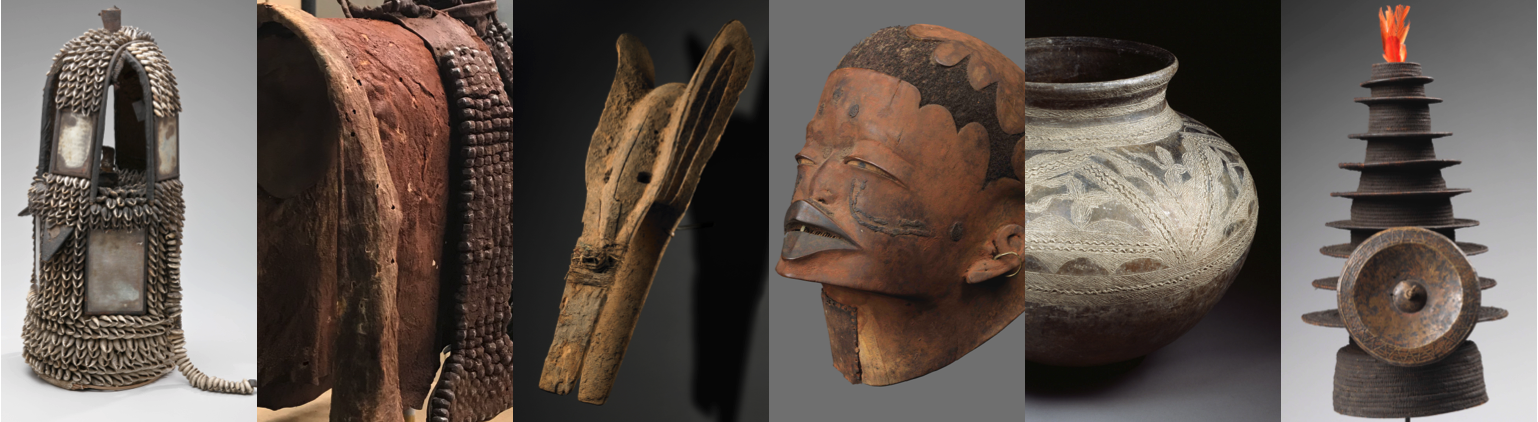
The Lipiko mask, created by the Makonde of northern Mozambique, is performed during festivals and masquerades that mark the completion of both boys’ and girls’ initiation. As the initiates sit in a line, the masked dancer tilts his head back, which parts the raffia or cloth to expose his identity, revealing to the young initiates a paradox, seemingly opposing concepts that the masks are at once ancestral spirits and living men portraying a character. Though only men perform, the carvings depict men, women, foreigners, and animals. The male masks are accented by a bedazzled raffia or cloth costume. Female masks are complemented by a wood body mask depicting a pregnant belly.
This expressive and sculpturally dynamic mask is from the 1940s based on the hair and scarification patterns as well as the sensitivity of the carving. The mask fits atop the dancer’s head like a helmet, covering his ears, eyes, and nose. Carved from one piece of wood, the mouth is a stylized diamond formed by two triangular lips; the nose is subtle, protruding slightly from the plane of the face, emphasizing the nostrils; the eyes are open, but articulated as simple slivers; and the ears are spirals that unravel like a fern. The beeswax keloids are still affixed and the complex geometric coiffure is made of human hair. Notice the way in which the scalloped hairline is reflected in the design of the Makonde ceramic vessel also on display. The wood is extremely thin and a rectangle of metal sheeting has been used to repair a broken section. The delicacy and expressiveness of this mask and its age are unusual. Consider the other media such as drumming and choreography that accompany and activate mapiko (plural). These masks are still made today and speak to both an historic culture and aesthetic in the face of a changing, but ever present tradition.